Print is often the first detail that attracts attention, but the way a scarf folds, drapes and finishes at the edge also changes its character. When comparing styles, it helps to consider these details together.
Begin with the shape
A square can be folded into different widths and tied in several ways. A narrow neck scarf or twilly creates a smaller accent, while a long scarf or wrap gives more coverage. Decide how you want the piece to sit before narrowing the dimensions.
Explore our square scarves, neckwear, shawls and seasonal styles for a visual starting point. Ask for the dimensions of the specific style you select rather than assuming that similar-looking photographs represent the same size.
Look at drape and surface separately
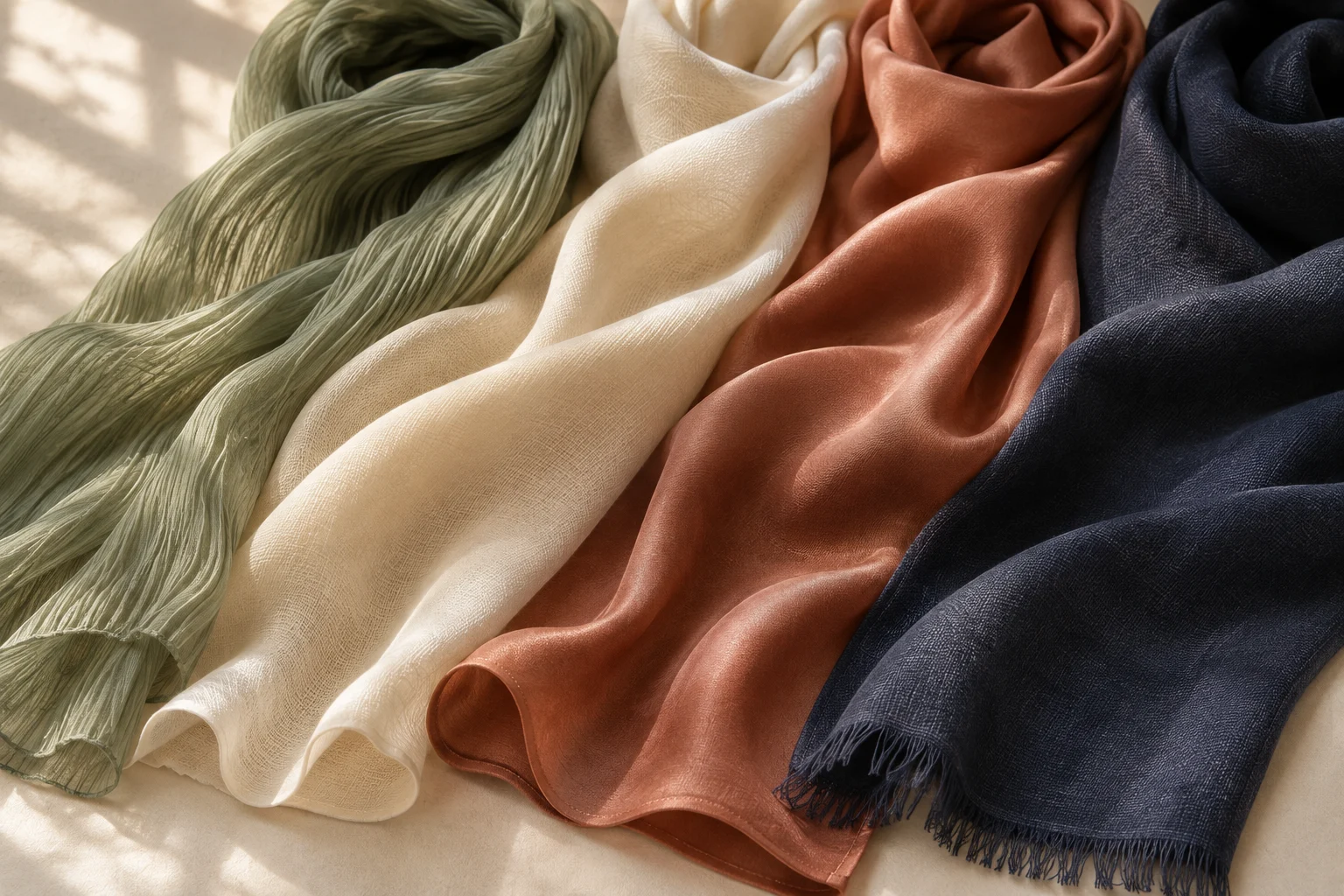
The surface tells one part of the story: smooth, softly textured, pleated or visibly woven. Drape is about the way the cloth falls and holds its shape. A fabric can look similar in a close-up and still behave differently when tied.
When discussing a sample, explain whether you want a neat compact knot, a relaxed fold or a more substantial layered look. A photograph of the intended styling can make that conversation clearer.
Confirm composition rather than judging by appearance
A photograph cannot establish fibre composition. Nor does a descriptive term such as “silky” tell you which fibres a scarf contains. Check the specification for the selected product and ask for clarification where a composition has not yet been confirmed.
Several styles in the FEIWEN collection are listed as polyester; other compositions need to be confirmed individually. If your project has a particular material requirement, include it in the enquiry at the beginning.
Make finishing part of the brief
Look at the border, the corners, the reverse and the ends of the scarf. A narrow hem, a fringed edge, pleating or a tassel detail will change its visual character. Consider how those details look both when the piece is laid flat and when it is worn.
- Check the finished dimensions and the way the edges sit.
- Review the print placement near borders and corners.
- Look at the reverse if it will be visible during styling.
- Discuss any care information and label requirements for the chosen product.
Compare samples on the same terms
If you are reviewing several options, record the reference, dimensions, composition and finish for each. Use similar lighting and the same styling approach when comparing them. Keep a short list of what you would retain or change.
The aim is a clear selection for your customer and use case. For a coordinated range, you may choose a shared palette across different shapes instead of expecting one style to do everything.
Tell us the feel and format you are looking for, and we can review the relevant product and sample details with you.