A useful scarf brief starts with the result you want to create. You might be building a coordinated retail range, choosing an accessory for a uniform, or planning a small gifting collection. Explaining that purpose helps give context to every choice that follows.
Start with the person who will wear it
Describe the intended customer, occasion and way the scarf will be worn. A compact neck scarf serves a different role from a large shoulder wrap. Think about whether the piece should be a statement print, an everyday neutral or a seasonal accent.
If you already have a style in mind, include its reference from our product collection. If you are still exploring, two or three reference images and a short explanation of what you like are a useful starting point.
Separate your essentials from your preferences
Write down the details that must be met, then list the elements you are happy to discuss. A required brand colour or a fixed presentation size may be essential. A particular edge treatment or packaging finish may be open to alternatives.
- Shape and size: square, long, narrow or wrap; include approximate dimensions.
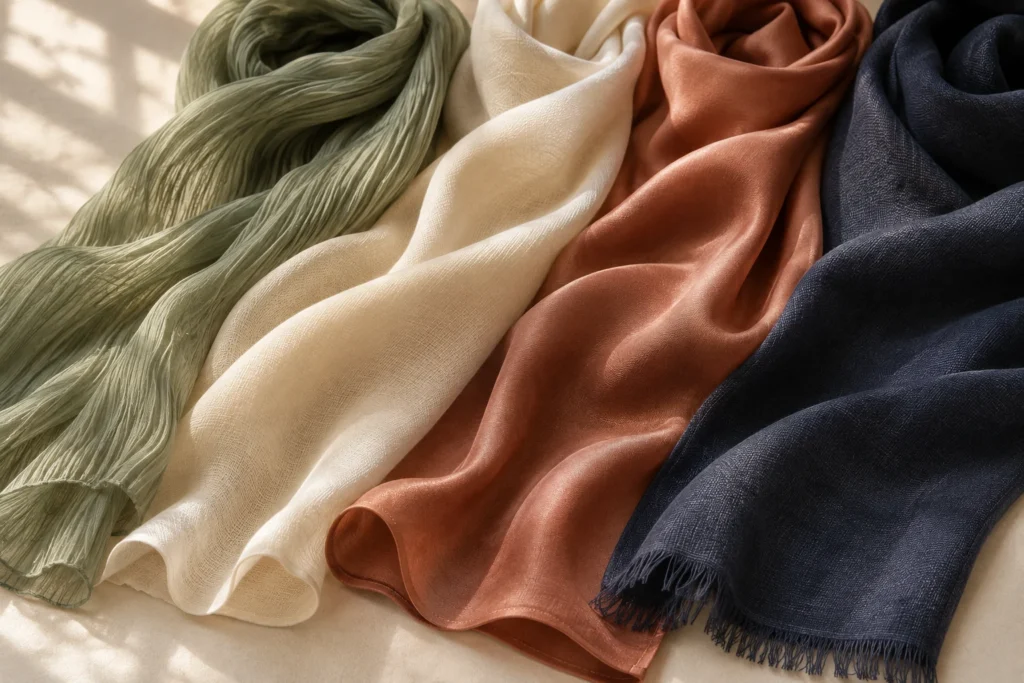
- Feel and appearance: the drape, texture, print and colour direction you prefer.
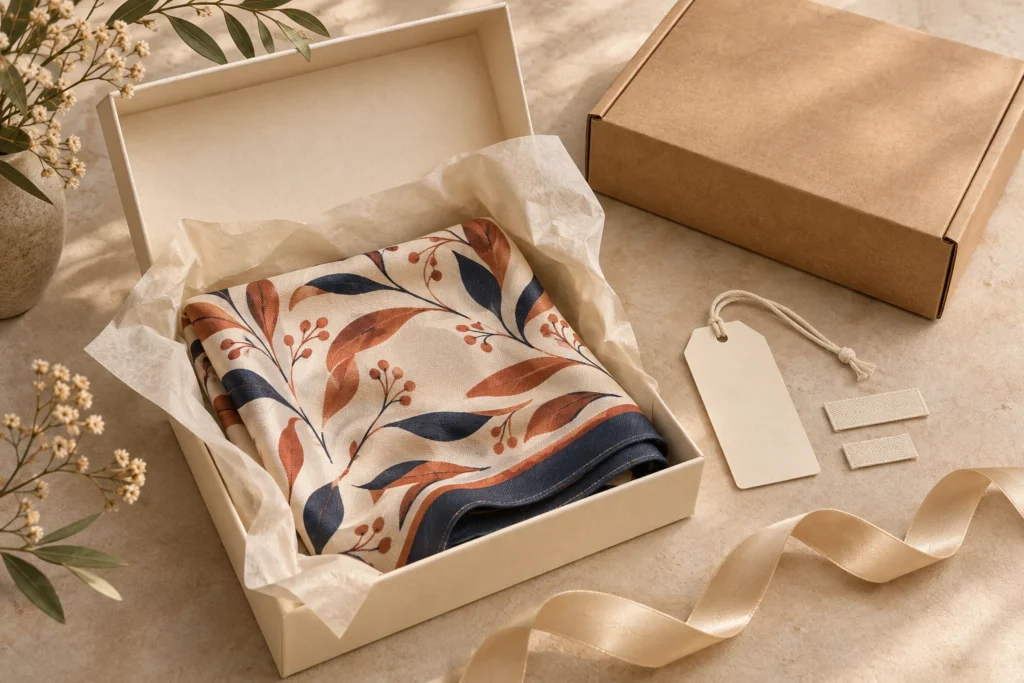
- Branding: artwork, logo placement, labels or a coordinated gift presentation.
- Quantity: your estimated total and the intended split across designs or colours.
- Destination and timing: where the products are needed and the date you are planning around.
Give each reference a purpose
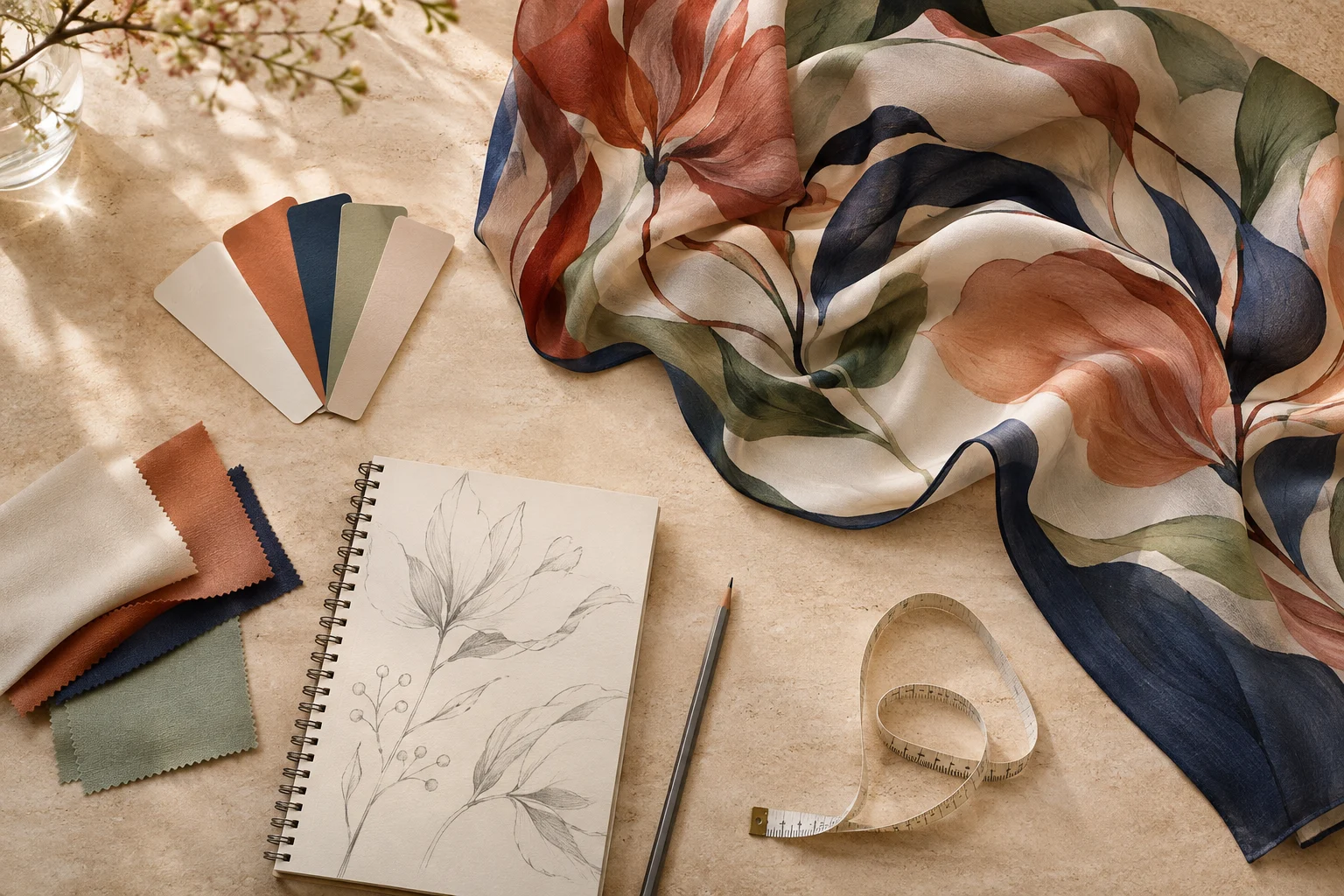
A reference is most helpful when you explain it. You may like the border of one scarf, the proportions of another, or the presentation of a gift set. Label those preferences in your brief rather than expecting a single photograph to communicate them all.
For custom artwork, send the best file you have and explain how it should appear when the scarf is folded or tied. Our customisation page outlines the print, label and presentation details to discuss.
Leave room for the sample conversation
Images are a starting point. Before confirming an order, discuss how you will review the material, dimensions, colour and finish. Keep the agreed specification and any sample changes together so that everyone is referring to the same version.
There is no need to guess an exact minimum quantity or production date before contacting us. Send your intended quantities and timing, and ask which options can be reviewed for your selected style.
A simple way to send your first enquiry
Tell us: “We are planning a scarf collection for [customer or use]. We like [reference styles], expect approximately [quantity], and need delivery to [destination]. We would like to discuss [custom requirements].” Add the details you already know and mark the rest as open questions.
Send your brief to FEIWEN to start the conversation.